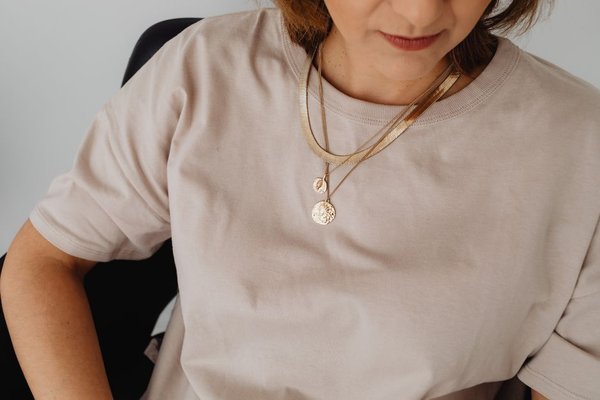
A necklace stack can look effortless in a photograph and turn into a knot by lunchtime. The difference comes down to where each chain sits, how much its pendant moves, and whether the pieces compete for attention. Learning how to layer necklaces is less about collecting more jewelry and more about giving each piece a clear role.
Start with two or three necklaces you already own. Once the lengths feel comfortable and the overall shape looks balanced, experiment with texture, pendants, and mixed metals without making the neckline feel crowded.
Build Your Layers Around Different Lengths
Chain length layering is the simplest way to create separation. When necklaces sit at almost the same height, their chains and pendants overlap more easily. Different lengths make each piece easier to see, although spacing alone cannot guarantee a tangle-free stack.
As a starting point, a short necklace around 14–16 inches sits near the neck, an 18-inch chain often reaches the collarbone, and a 20–24-inch piece creates a lower focal point. These positions vary with neck size, pendant weight, and clothing.
Try leaving roughly two to four inches between chain lengths, then check the distance between pendants. A long pendant on an 18-inch chain might meet a small charm on a 22-inch chain. What matters is the visible space, not just measurements on labels.
Choose One Necklace to Lead the Look
A useful necklace layering guide begins with an anchor piece. It might be a coin pendant, a tiny gemstone, or a sculptural chain. Make that the point of interest and let the other necklaces support it rather than compete.
Try a Three-Necklace Combination
For a plain crewneck tee, begin with a fine 16-inch chain, add an 18-inch chain with a tiny charm, and finish with a 22-inch coin pendant. The first frames the neck, the second adds detail, and the third draws the eye downward. If the coin feels too heavy, swap it for a smaller pendant rather than adding another necklace.
A chunky statement chain needs a different approach: pair it with one quieter piece. Two well-spaced necklaces can look more deliberate than four fighting for space.
Mix Chain Textures Without Making the Stack Busy
Three nearly identical thin chains can blur together. A smooth snake chain, a simple cable chain, and a slightly heavier curb chain create contrast without requiring decorative pendants everywhere. Keep visual weight balanced: if the lowest necklace is substantial, make the upper layers lighter.
Keep Pendant Stacking Intentional
For pendant stacking, choose one prominent shape and one smaller accent. Two large pendants at neighboring heights may knock together. Leaving one chain pendant-free gives the eye a pause.
Consider shape as well as size. A round coin and a tiny bar pendant look distinct, while several similar round charms can form a cluttered cluster. If you love multiple charms, consider wearing them together on one chain.
How to Stop Layered Necklaces From Tangling
Tangles happen when chains cross, rotate, or catch on clasps and pendants. Similar lengths create more chances for contact, and very fine chains can twist around heavier pieces. Even a neatly arranged stack moves when you walk, bend, or adjust clothes.
Fasten and Position Each Layer Separately
Put on the shortest necklace first, then add longer pieces one at a time. Straighten each chain before fastening the next, keep clasps at the back, and make sure a pendant is not hanging over another chain.
A necklace layering clasp or detangler can hold separate chains at designated attachment points, making a stack easier to put on and sometimes reducing twists. It cannot stop every tangle: chains may still cross in front, particularly when they are similarly long or delicate.
Run a Quick Movement Test
Turn your head, lean forward, and walk around the room. If two pendants collide or a chain slides over another, adjust spacing or remove one piece. This test is more revealing than judging the stack while standing still.
For long days, avoid pairing a very light chain with an unusually heavy pendant that pulls it out of position. Remove necklaces before sleeping or vigorous activity, and store each separately.
Work With Your Neckline, Not Against It
A crewneck gives longer pendants a simple background, while a V-neck often looks best when the lowest necklace follows the opening rather than cutting across its edge. With an open collared shirt, try a shorter chain near the collar and one lower pendant.
Busy prints and embellished necklines may call for just one necklace. If the outfit already provides detail, jewelry can be a finishing touch instead of another focal point. A guide to choosing necklace lengths can help you compare different drops with your favorite tops.
Can You Layer Gold and Silver Necklaces?
Yes. Mixed metals look intentional when they share something else, such as finish, shape, or delicacy. Try a slim silver chain with a small gold pendant, then repeat one tone in an earring or ring. You are creating a connection, not following a strict matching rule.
If the mix looks scattered, reduce competing textures before removing a metal. Two clean chains in different colors may feel calmer than three ornate chains in one finish. The same principle works when learning how to mix gold and silver jewelry.
Small Adjustments That Fix an Awkward Stack
When necklaces bunch together, shorten the top chain with an adjustable clasp or lengthen the bottom with an extender. If pendants still meet, swap one for a plain chain rather than replacing the whole combination.
If the stack looks busy, remove the piece with the strongest competing detail. If it feels flat, change one texture instead of adding another necklace. If the longest necklace shifts sideways, check whether its pendant catches on clothing.
These layered necklace tips solve problems with spacing, weight, and movement. They are more useful than following a rigid formula for every outfit. Similar ideas apply when choosing everyday jewelry accessories that feel balanced.
Frequently Asked Questions
How many necklaces should you layer at once?
Two or three are an easy starting point. More can work, but each extra chain adds visual detail and another opportunity for tangling. Let your neckline and comfort decide.
How far apart should layered necklaces be?
Try a two-to-four-inch difference in chain lengths, then adjust for how they hang. Pendant size and neckline shape can change visible spacing considerably.
Do necklace spacers prevent tangling completely?
No. Multi-strand clasps keep attachment points organized, but chains can still cross at the front as you move. Combine a spacer with varied lengths and a movement test.
Can you layer necklaces with different pendants?
Absolutely. Use one larger pendant as the focal point and keep another smaller or simpler. Avoid positioning similarly sized pendants where they repeatedly strike each other.
A Balanced Stack Is One You Can Actually Wear
The best layered necklaces have enough separation to show their shapes and enough simplicity to feel like one look. Choose an anchor piece, vary lengths and textures, and test how everything moves before leaving home. If the stack tangles or feels crowded, one thoughtful adjustment often helps more than another accessory.