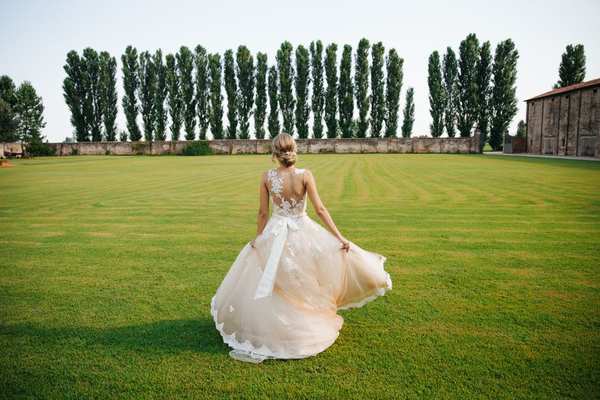
A garden ceremony offers a beautiful backdrop: climbing roses, stone paths, soft light and leaves moving in the breeze. But those details also change how a wedding dress behaves. Grass catches long hems, gravel challenges delicate shoes, and warm sunshine makes heavy layers less appealing. The best garden wedding dresses balance a romantic appearance with the practical realities of being outdoors.
Before choosing a gown because it looks botanical, think about your route to the aisle, the reception surface, the weather and how freely you want to move. Those small details can make a big difference on the day.
Choose a Silhouette That Moves With the Setting
A soft A-line gown is an excellent starting point. It defines the waist and releases into a skirt that moves easily. A modest ball gown can look wonderful in a formal estate garden, although extra layers may prove awkward along narrow paths.
For an intimate courtyard or wildflower ceremony, a slip dress or relaxed sheath creates a quieter look. These silhouettes also suit brides who plan to mingle at a standing reception or let dramatic flowers provide the visual richness.
A fitted mermaid gown can work outside, too. Test it by taking full-length strides, sitting and turning during your appointment. A flattering photograph matters, but so does reaching the ceremony without worrying about each step.
Let Fabric Create the Romance
Chiffon and soft tulle
Chiffon gives an outdoor wedding dress gentle movement, particularly in a breeze. Tulle creates airy volume without a stiff appearance. Both can catch on twigs, rough paving or decorative furniture, so check how the hem behaves before committing to a very long skirt.
Lace and floral texture
Floral lace, embroidered vines and delicate appliqués echo the surroundings without demanding an all-over flower print. A lace bodice with a simpler skirt often feels more balanced than dense embellishment throughout. If you love three-dimensional petals, consider concentrating them away from the hem, where they are less likely to brush damp grass.
Crepe, organza and satin
Not every garden bridal gown needs to look whimsical. Crepe brings clean, modern lines; organza adds crisp, translucent volume; and satin lends polish to a formal evening ceremony. Lining, structure and the number of layers all affect comfort, so judge the entire dress rather than relying on the fabric name.
Make the Train Work for the Terrain
A cathedral train looks dramatic on a clean aisle but may collect leaves, soil and moisture between locations. A sweep or modest chapel train gives many brides enough drama with less fabric to manage. A detachable train or overskirt offers another possibility for an impressive entrance and easier movement afterward.
Ask an alterations specialist about a secure bustle and practise fastening it before the wedding. Give someone in your party a demonstration, too. Intricate lace or embellishments need particular care when lifted and secured.
Imagine vows beneath a pergola, photographs across a lawn and dinner inside a greenhouse. A train may be perfect for the ceremony, yet much easier to bustle before crossing wet grass. Planning those transitions is more helpful than judging a gown while standing still in a salon.
Match the Gown to the Garden’s Character
Rose gardens and country estates
For manicured borders and classic architecture, try a romantic wedding dress with fine lace, softly shaped sleeves or restrained floral embroidery. A gently structured A-line silhouette feels timeless without competing with colorful planting.
Wildflower meadows and rustic gardens
Relaxed skirts, simple bodices and subtle embroidery suit a more natural landscape. Rustic does not have to mean casual: refined fabric and thoughtful tailoring keep a minimal gown distinctly bridal.
Formal botanical gardens
Clean lines, sculptural sleeves and polished skirts complement symmetrical hedges and architectural pathways. Smooth, paved walkways may offer greater flexibility with train length than an uneven meadow.
Flowers need not dictate the dress color. Ivory, warm white and champagne look different in sun and shade. Take fabric samples outside before settling on a shade, especially if photographs will be taken in changing light.
Prepare for Weather, Shoes and Uneven Ground
Summer ceremonies can be humid, while spring and autumn evenings may turn chilly. Try the gown with its actual lining and undergarments. Consider whether removable sleeves, a wrap or another light layer would help as temperatures change.
Shoes affect how the hem falls. Have your gown fitted with the footwear you expect to wear, including any flats you plan to change into. Block heels, wedges and flats generally provide more stability on grass than stilettos, but the best option depends on the actual surface and your comfort.
Ask the venue three questions before final alterations: Is the aisle grass or solid flooring? Are portrait paths paved or gravel? What is the rain plan? The answers can influence hem length, train style and whether you need a discreet skirt loop for lifting fabric.
For a complete outfit, explore wedding shoes for outdoor ceremonies and bridal veil styles before finalizing accessories. Coordinating those choices early avoids surprises at the final fitting.
Keep Accessories in Balance With the Flowers
Gardens already supply texture and color, so accessories can stay restrained. A sheer veil, pearl earrings or a simple ribbon may be enough. If the gown has embroidered sleeves, consider a quieter bouquet and jewelry rather than introducing more competing details.
For inspiration, compare lace wedding dress styles and notice how differently small motifs and bold floral patterns read against a leafy backdrop. The aim is not to match every flower; it is to create a look that feels at home in the setting.
Frequently Asked Questions
What type of wedding dress is best for a garden wedding?
A-line, relaxed sheath and softly layered gowns are appealing because they combine elegance with movement. The best choice still depends on your venue’s formality, the terrain and how comfortably you can walk.
Can I wear a long train to an outdoor ceremony?
Yes, especially when the aisle is paved or covered. Arrange a bustle or detachable train for moving through grass, and expect the hem to need more care than it would indoors.
Are floral wedding dresses too much for a flower-filled venue?
Not necessarily. Fine embroidery or appliqués can complement the surroundings beautifully. If the planting is especially colorful, smaller motifs or a plain skirt can help keep the look balanced.
Should my garden wedding dress be shorter?
It does not have to be. A properly fitted floor-length hem can work well, while tea-length or ankle-length styles provide extra clearance on uneven ground. Comfortable movement matters more than a strict length rule.
A Dress That Belongs in the Moment
The loveliest garden wedding dresses do more than resemble the flowers around them. They let you enjoy the surroundings: walk down the aisle, cross a lawn for photographs and celebrate without constantly adjusting fabric. Choose a silhouette that feels like you, then refine the hem, train and layers for the place where you will wear it. Romance and practicality can belong in the same gown.