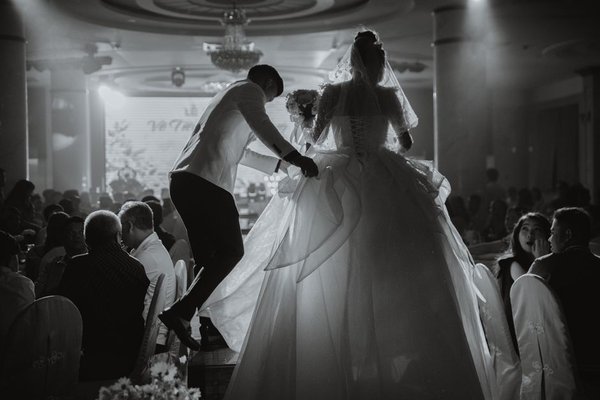
A dramatic train can make the walk down the aisle unforgettable. It becomes less charming when you need to climb stairs, greet guests or dance without stepping on your dress. A bustle solves that problem without removing the train. Understanding the main wedding dress bustle types helps you choose an alteration that suits both the gown’s design and the way you want to move at your reception.
What Does a Wedding Dress Bustle Do?
A bustle temporarily secures the train above the floor using buttons, loops, hooks or ties. Most gowns are not sold with a finished bustle because its placement depends on the final hem, fabric and train length. The train hangs freely for the ceremony and can be lifted afterward.
Here is the key design question: where does the lifted fabric go? Different bridal bustle styles either display it in decorative folds or conceal it beneath the skirt. Neither approach is universally better.
American Bustle: The Train Folds Over the Skirt
An American bustle, also called an over-bustle, lifts the train onto the outside of the gown. Loops attached to the train connect to discreet buttons or fastenings higher on the back, forming visible swags or drapes.
It can complement A-line dresses and ball gowns, particularly when the new folds echo the skirt’s fullness. A light train might need few pick-up points; longer or heavier designs may need several to distribute weight. There is no universally correct number of buttons.
Visibility is the trade-off. On a sleek crepe gown, the gathered fabric might interrupt a smooth silhouette. Ask your alterations specialist to pin a sample arrangement before deciding, especially if lace motifs or decorative seams cross the back.
French Bustle: The Train Tucks Underneath
A French bustle, or under-bustle, gathers the train under the skirt. Internal ribbons or fasteners bring designated points together, creating soft folds without obvious exterior buttons.
This may suit certain fit-and-flare or lace dresses when you want their surface detailing to remain the focus. Yet the best arrangement depends on which seams and lining sections can safely support the fabric.
The hidden construction presents a practical challenge: someone must locate and fasten several ribbon pairs beneath the skirt. Clearly labelled or colour-matched ties help. Test a French bustle while walking and sitting; incorrectly placed folds can create bulk or pull the hem unevenly.
Ballroom Bustle: A Nearly Train-Free Appearance
A ballroom bustle conceals the train beneath the gown using multiple attachment points, aiming for a balanced, floor-length appearance all around. Instead of a noticeable drape, the reception skirt looks closer to a dress without a train.
It is worth exploring for a structured ball gown or a design where a clean back view matters. However, hiding substantial fabric takes careful construction, and multiple fastenings can be time-consuming. A very heavy train may not fold neatly under every skirt. Judge the result on your own gown, not just a photograph.
Other Bustle Options Worth Knowing
Austrian Bustle
An Austrian bustle uses internal ribbons or drawstrings to gather fabric into vertical ruching. The result is textured rather than simply lifted at the waist. Soft, flowing materials may form attractive gathers; stiff or heavily embellished sections can resist the effect.
Wrist Loop and Detachable Trains
A purpose-made wrist loop lets you hold a light train briefly, perhaps for photographs or a short walk. It is not a hands-free wedding dress train bustle, and carrying fabric all evening gets tiring. Do not assume an existing small loop is designed for carrying the train; some are merely garment-hanging loops.
If your gown has a detachable train or overskirt, removing it may be more convenient than bustling. Check how the remaining dress looks and moves.
How to Choose the Best Bustle for Your Gown
Start with fabric and weight, not a favourite style name. Light tulle behaves differently from heavy satin, while delicate lace may need reinforcement around fastening points. A mermaid skirt offers less room to hide fabric than a full ball gown.
Next, decide which reception silhouette appeals to you: the drapes of an American bustle, the softer underside folds of a French bustle or the cleaner hem of a ballroom bustle. Reviewing wedding dress silhouettes before your fitting can help you describe your preference.
Consider your venue, too. A train on a garden lawn, crowded dance floor or staircase needs a reliable lift, not merely attractive folds. Ask your fitter to check whether every gathered section stays clear of your feet while turning.
Make the Final Fitting a Real-World Test
Imagine a chapel-train gown with a lace border along its edge. An over-bustle might create graceful folds, but it could also bunch the pattern at centre back. Have the specialist mock up an exterior lift and an under-bustle, then compare both from behind while walking. Seeing the lace move often settles the decision.
Have the hem checked with your actual wedding shoes before finalising the bustle. Practise standing, turning, sitting and a few dance steps with it fastened. Check for fabric still sweeping the floor. A wedding dress alterations timeline can help you allow enough room for refinements.
Prepare Someone to Fasten It on the Wedding Day
Bring the person who will bustle your dress to a fitting. Ask the specialist to demonstrate each fastening, then let your helper practise. Numbered ribbons, a phone video and a photograph of the finished back can prevent confusion.
Set aside a few minutes after the ceremony or portraits to lift the train. Check all attachments, and avoid pulling hard if something seems misaligned. Understanding wedding dress train lengths can also help you anticipate how much fabric your helper will manage.
Frequently Asked Questions
What is the difference between an American and French bustle?
An American bustle lifts the train onto the outside of the skirt, creating visible draping. A French bustle secures it underneath using hidden fasteners, forming softer folds and added volume.
Which wedding dress bustle is easiest to use?
A simple over-bustle is often straightforward to fasten, but ease depends on the number and placement of connections. A clearly labelled French bustle can also be manageable with practice.
Can any wedding dress have a bustle?
Many trains can be bustled, but unusually constructed, very delicate or extremely heavy gowns may require a custom solution. A professional should assess the fabric and seams before recommending a design.
When should I bustle my wedding dress?
Many brides leave the train down for the ceremony and formal portraits, then bustle it before mingling or dancing. The venue and your schedule may make an earlier change more comfortable.
Choose the Look You Can Live In
The right bustle preserves what you love about the dress while making your reception easier to enjoy. Compare options on your gown, test the finished shape in motion and show a helper how it works. A thoughtful bustle should feel like part of the design rather than an emergency fix.