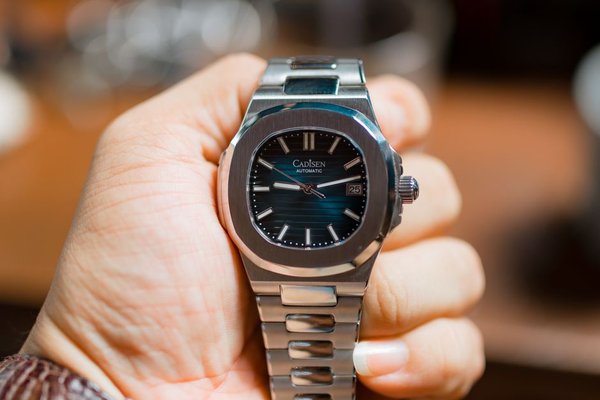
Two watches can look almost identical yet behave very differently on your wrist. One may keep running for years with little attention; the other depends on a wound spring and tiny moving parts. That distinction sits at the heart of automatic vs quartz watches. Neither movement is universally better. The right choice depends on your habits, expectations of accuracy, and what you enjoy about ownership.
Automatic vs Quartz: The Key Differences
Quartz generally wins on accuracy and convenience. Automatic watches appeal to people who appreciate mechanical craftsmanship and the experience of a movement working without a conventional battery. A quartz model needs electrical power, supplied by a replaceable cell or a rechargeable solar system. An automatic needs wrist movement or winding and occasionally more involved servicing.
Price is less clear-cut: both types range from affordable everyday watches to luxury pieces. Movement type alone does not determine quality.
How Each Movement Keeps Time
Automatic Watches Use a Wound Spring
An automatic watch movement is a type of mechanical movement. A weighted rotor turns as your wrist moves, winding a mainspring that stores energy. Gears release the energy in controlled steps, regulated by a balance wheel and escapement. Many automatic models also allow manual winding through the crown.
That stored energy is limited. Common models offer around 40 hours of power reserve, while others run considerably longer. Leave a watch unworn beyond its reserve and it will stop until wound and reset. Automatic does not mean perpetual motion.
Quartz Watches Use a Vibrating Crystal
A quartz watch movement uses electricity to make a quartz crystal oscillate at a stable frequency, commonly 32,768 times per second. An electronic circuit counts the oscillations, and an analog model typically uses a motor to move its hands.
Most traditional quartz watches use replaceable batteries; solar quartz watches collect light and store energy in a rechargeable cell. Consequently, not every quartz watch needs a new disposable battery every few years. Check the particular model’s power system.
Which Is More Accurate?
For everyday watch accuracy, quartz usually has a decisive advantage. Standard quartz movements may be rated around plus or minus 15 to 20 seconds per month under specified conditions. High-accuracy quartz watches can do substantially better, although performance varies by model.
Mechanical watches are generally rated in seconds per day. For example, Seiko lists a daily rate of plus 45 to minus 35 seconds for its 4R35 and 4R36 automatic movements under stated conditions. Carefully regulated movements can perform better. These specifications describe particular calibres, not every automatic watch.
Position, temperature, magnetic exposure and winding level can affect mechanical timekeeping. To test your own automatic, compare it with a reliable clock at the same time each day for a week. Calculate its average daily gain or loss rather than judging it from one afternoon.
Daily Use: Convenience or Connection?
Imagine wearing a watch Monday through Friday, then leaving it in a drawer for the weekend. On Monday, a battery-powered quartz watch should still be running. An automatic with a 40-hour reserve may have stopped, requiring winding and resetting. A date display adds another adjustment.
If you wear an automatic daily, the interaction may be part of its charm. Many mechanical seconds hands appear to sweep because they advance several times per second, while traditional quartz hands usually tick once per second. Exceptions exist.
Quartz is particularly convenient when rotating between several watches. A watch winder can keep some automatics running, but most simple models do not require one. Resting an automatic after its power reserve expires is not inherently harmful.
Maintenance and Long-Term Costs
Quartz Upkeep
Battery-powered quartz watches need a cell replacement when required, ideally before an exhausted cell can leak. Battery life varies with movement and functions. Solar models require appropriate light and may eventually need rechargeable-cell service.
Low-maintenance does not mean maintenance-free. Seals age, and water resistance should be assessed when swimming or frequent water exposure matters. Certain premium or discontinued quartz movements can also be expensive to repair.
Automatic Upkeep
Mechanical watches contain lubricated parts that can wear or require adjustment. Servicing may involve dismantling, cleaning, lubrication and regulation. Follow the maker’s guidance; there is no dependable universal service interval for every automatic movement.
A mechanical service normally costs more than an ordinary quartz battery change. Ask about service availability before purchasing an inexpensive automatic, especially if replacement parts or specialist technicians may be difficult to find.
Feel, Durability and Design
Quartz movements often make thinner, lighter watches possible, although case design matters more than the movement alone. An automatic can feel substantial, but extra thickness may become annoying under a shirt cuff.
Both technologies can be durable. Neither movement makes a watch automatically waterproof or shockproof. Strong impacts can damage either type, and magnetism can disrupt mechanical timekeeping. Try watches on and compare thickness, weight and lug-to-lug length. A guide to watch case sizes can help explain why one fits better than another.
Choosing the Right Watch for Your Routine
Choose quartz if you prioritise accurate timekeeping, minimal resetting and easy ownership, particularly when you travel or switch between watches. For swimming or outdoor use, understand watch water-resistance ratings independently of the movement inside.
Choose automatic if traditional engineering, a visible balance wheel or the small ritual of winding appeals to you. Accept that occasional time adjustment is normal. Learning how to wind and set a mechanical watch correctly is useful before buying your first one.
Compare individual models by warranty, movement specifications, finishing, service support and fit. An excellent quartz watch is often a smarter purchase than a poorly built automatic, and the reverse is equally possible.
Frequently Asked Questions
Are automatic watches better than quartz watches?
Not objectively. Automatics offer mechanical interest and craftsmanship; quartz usually offers superior accuracy and simpler daily use. Better depends on your priorities.
How long does an automatic watch run unworn?
Until its power reserve is exhausted. Many models last roughly 40 hours when fully wound, while others offer longer reserves. It can remain stopped in suitable storage.
Can quartz watches last as long as automatic watches?
Either can last decades with proper care. Long-term repairability depends on parts and service availability: mechanical components can sometimes be repaired, while discontinued electronic modules can be harder to replace.
Does a sweeping second hand prove a watch is automatic?
No. Many automatic hands look smoother, but some quartz watches also produce a sweeping motion. Check the actual movement specification.
Which Movement Makes More Sense?
Automatic vs quartz watches is not a contest between superior and inferior technology. Quartz makes precise timekeeping easy; automatic watches turn it into a mechanical experience you can appreciate and occasionally tend to. Choose the trade-offs that will still suit you on an ordinary workday, not just when admiring the watch in a shop.