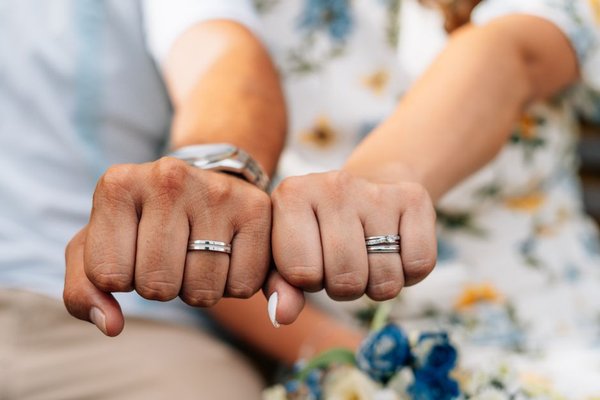
A beautiful ring stack is more than several pretty bands on one finger. Rings share limited space, move when you bend your hand, and sometimes rub against one another. Unlike necklaces or bracelets, they also affect how comfortably you grip things. If you are learning how to stack rings, begin with a combination you can wear through an ordinary day, then build the look around it.
The goal is not to fill every finger. It is to give each piece a role so the arrangement feels intentional rather than crowded.
Choose an Anchor Ring First
Pick the ring you most want to wear: a signet, a slim gold band, a birthstone ring, or perhaps an engagement ring. This is your anchor. Its width, shape, and setting guide what belongs beside it.
If it has a prominent stone, try a plain band instead of another large setting. If it is smooth and simple, a twisted or textured ring can add interest. Starting with one piece makes ring styling easier because every addition has a purpose.
Check the Fit With Every Ring On
Three individually comfortable bands may feel tight when worn together. Multiple rings cover more of the finger, and a wide combined stack can fit differently from a single slim ring. Your finger should bend naturally, and the rings should come off without excessive force.
Try the complete combination. Open and close your hand, then notice whether edges pinch or bands press into the base of your finger. Leave room below the knuckle for movement. Finger size can vary with temperature and swelling, so check the fit at different times.
If a stack consistently feels tight, consult a jeweler rather than forcing the rings or guessing at a larger size. Professional sizing is particularly helpful for wide bands.
Balance Thick and Thin Bands
One of the easiest ring stacking ideas is mixing widths. A medium-width band beside one or two finer rings creates contrast without overwhelming the finger. Several chunky rings can also work, but they need more room and may limit movement.
Look at the silhouette from the side. A rounded band sits differently beside a flat-edged one, while raised settings may prevent neighboring rings from meeting neatly. A small visible gap is fine; it can make details easier to appreciate.
Make Mixed Metals Look Deliberate
Mixed metal rings feel cohesive when you repeat a color or finish. Pair a yellow-gold band with a silver-toned textured ring, then echo the gold in a slim band on another finger. That subtle repetition ties everything together without requiring a matching set.
Alternatively, keep shapes consistent and let the metal colors provide contrast. Three plain bands in different tones often look calmer than three ornate ones. Because different materials can wear against each other, ask a jeweler about direct contact before regularly stacking valuable pieces.
Give Gemstones Some Breathing Room
A gemstone ring already attracts attention, so quieter neighboring bands often make it shine. Try a plain curved band or a delicate low-profile ring rather than a second tall setting. Check closely that surrounding bands do not press against prongs or rub the stone.
For an engagement ring, a contoured band may sit more neatly than a straight one, depending on the setting. A jeweler can check whether repeated contact might damage an important piece over time.
Distribute Rings Across Your Hand
Stacked rings need not share one finger. Two bands on the middle finger and one slim ring on the index or pinky may create a more balanced outline than piling all three together. Bare space gives the eye somewhere to rest.
If you wear a bold piece on one hand, keep the other lighter. Perfect symmetry is unnecessary. Repeating one metal tone or surface texture is enough to connect the two hands. Finger shape and comfort matter more than rigid rules.
Three Ring Combinations to Try
A Minimal Two-Band Stack
Wear a smooth slim band beside a slightly wider hammered band. Keep the metals alike for a quiet look, or choose different tones for contrast. It is a simple starting point for everyday layering.
A Gemstone-Centered Stack
Place a small gemstone ring between two compatible low-profile bands, provided neither rubs its setting. Let the center stone supply the color while the surrounding rings add structure.
A Split-Finger Arrangement
Wear a medium-width ring on your middle finger and two thin bands on your ring finger. Leave the index bare. The change in height and width creates interest without placing all the bulk on one finger.
Try the Everyday Comfort Test
Wear your proposed stack while typing, holding a phone, carrying a bag, and putting on a sweater. A tall stone that looks lovely in a mirror may catch on knitwear; a broad stack might press against adjacent fingers when you grip a steering wheel. Those small annoyances matter more than a perfectly arranged photograph.
Remove rings for activities that might snag or damage them, and dry your skin and jewelry after washing. If pieces repeatedly twist, pinch, or knock together, simplify the arrangement. Comfortable ring styling is easier to enjoy consistently.
Frequently Asked Questions
How many rings should I stack on one finger?
There is no fixed number. Two or three slim bands are a useful starting point, but combined width and comfort matter more. Stop when the arrangement interferes with normal movement.
Can you stack gold and silver rings together?
Yes. Mixed tones can look intentional, especially when one color repeats elsewhere. Be mindful of wear when precious pieces made from different materials touch.
Should all stacking rings be the same size?
Not necessarily. Each ring must fit its intended finger and position comfortably. A jeweler can help you assess sizing when several bands create a wider stack.
How can I avoid a cluttered ring stack?
Choose one focal point, vary widths, and leave a little empty space. If every piece has a large stone or bold texture, remove one and see whether the rest look stronger.
Make the Stack Your Own
Knowing how to stack rings comes down to proportion, spacing, and a realistic idea of comfort. Begin with a favorite piece, experiment with texture and finger placement, and keep only the combinations that work in daily life. The most personal stack is not necessarily the biggest one.