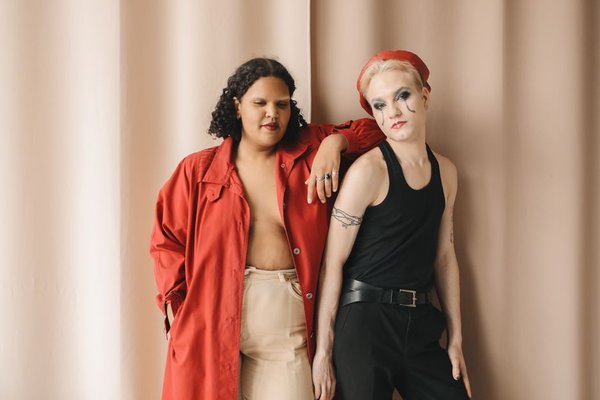
Androgynous dressing works best when it is treated as a question of proportion, fabric, shape, and personal taste rather than a checklist of “masculine” or “feminine” items. A structured jacket can look softer over a fluid shirt, while wide trousers can feel sharper with a fitted knit. The aim is not to remove personality from your clothes. It is to give yourself more ways to express it, using pieces that can shift mood depending on how you combine them.
Start With Proportion, Not Labels
One of the most useful androgynous style tips is to decide where you want volume and where you want definition. If you wear an oversized blazer, try straight-leg trousers and a closer-fitting top so the outfit still has a clear shape. If your trousers are wide, a cropped jacket or neatly tucked shirt can stop the silhouette from feeling heavy.
This also makes shopping easier. Instead of asking whether an item looks “androgynous,” ask what it does to your proportions. Does it broaden the shoulders, lengthen the leg line, soften the waist, or create a straighter outline? Those questions tell you far more about whether the piece will work with your existing wardrobe.
Use Fabric to Change the Mood
Fabric affects how a garment sits and moves. Crisp cotton, denim, wool suiting, leather, and heavier twill tend to create clearer lines. Fine knits and lighter fabrics usually drape more softly. Mixing structure with movement is an easy way to make an outfit feel considered without making it complicated.
For example, pair a boxy charcoal blazer with a soft white shirt and relaxed black trousers. The jacket gives the outfit definition, while the shirt keeps it from becoming too rigid. Swap that shirt for a heavyweight crew-neck tee and the same base becomes more casual. Useful androgynous fashion tips often come down to small changes like this rather than buying a completely new wardrobe.
Create a Reliable Base Uniform
A personal uniform gives you a starting point when you do not want to overthink getting dressed. It might be straight trousers, a plain tee, an overshirt, and loafers. It could be loose jeans, a fitted tank, a bomber jacket, and simple trainers. Once you know your dependable base, you can change one element at a time without losing the overall direction.
If you like a polished look, begin with tailored trousers in black, navy, taupe, or charcoal, then rotate shirts, fine-gauge knits, jackets, and footwear. If you prefer a relaxed tomboy style guide approach, use denim, chore jackets, rugby shirts, utility trousers, and clean sneakers as your foundation. The key is consistency of silhouette, not copying an aesthetic exactly.
Pay Attention to Shoulders and Waist Placement
Shoulder seams have a large effect on the character of an outfit. A jacket with a defined shoulder creates a more architectural shape, while a dropped shoulder feels relaxed. Waist placement matters too. High-rise trousers can emphasize the waist, while mid-rise straight trousers often create a longer, less cinched torso line.
You can also adjust the effect through styling. Leave a shirt untucked for a straighter outline, use a half-tuck for a little definition, or wear an open overshirt to break up the torso. Gender neutral styling becomes much easier when these details are treated as adjustable tools rather than fixed rules.
Let Shoes and Accessories Set the Direction
Footwear can change the mood of an outfit quickly. Straight black trousers, a white tee, and a cropped jacket feel sharper with loafers, more casual with retro trainers, and more refined with a slim boot. If an outfit seems slightly off, changing the shoes is often easier than rebuilding everything else.
Accessories work best when they support or gently challenge the clothing. A compact watch can add precision to a soft outfit, while a narrow chain can soften workwear. A structured belt can define an oversized look, and a cap or beanie can make tailoring feel more relaxed. Choose one or two details that feel purposeful instead of adding accessories simply to fill space.
Use Colour and Fit to Make the Look Personal
Neutral palettes are common because they make texture and proportion easy to see, but androgynous dressing does not require black, grey, and beige. Forest green, rust, burgundy, cobalt, cream, and dusty blue can all work. An easy method is to keep most of the outfit quiet and introduce one stronger colour.
Try navy trousers, a cream knit, and brown loafers, then add a deep green jacket. The outfit remains coordinated but gains identity. If you want to explore related ideas, gender-fluid fashion basics, mixing masculine and feminine clothing, and building a capsule wardrobe are natural next topics.
Fit matters more than the department where a garment is sold. Men’s shirts may offer more shoulder room and straighter cuts, while women’s tailoring may provide more cropped lengths or different shaping. Unisex clothing can be useful too, but sizing is never universal. Try pieces with the clothes you actually wear, and consider simple alterations when trouser or sleeve length is the only thing keeping an item from working.
FAQ
What are the easiest pieces to start an androgynous wardrobe?
Begin with flexible basics: straight-leg trousers or jeans, plain tees, button-up shirts, an overshirt or blazer, a simple knit, and shoes such as loafers or clean trainers. Build around the silhouettes you reach for most often.
Do androgynous outfits have to be oversized?
No. Oversized clothing is only one option. A fitted knit with straight trousers, a cropped jacket with wide-leg pants, or a slim shirt under a structured coat can all create an androgynous look. Balance matters more than size.
Can I mix feminine and masculine pieces?
Yes. That mix is often what makes the outfit feel individual. You might combine tailored trousers with delicate jewellery, pair a flowing shirt with heavier boots, or wear a structured jacket over a softer top. Contrast works best when the overall proportions still feel balanced.
How do I make androgynous style feel like my own?
Repeat the details you genuinely enjoy. That might be a favourite trouser shape, silver jewellery, monochrome layers, vintage jackets, bright socks, or a particular type of shoe. Personal style usually develops through repeated choices rather than by following every trend.
Build Around What Feels Natural
The strongest androgynous outfits are rarely the ones that follow the most rules. They are the ones where proportion, fabric, fit, and small styling choices work together. Start with a reliable silhouette, change one variable at a time, and notice which combinations make you feel most comfortable and recognizable. Over time, those repeated choices become a wardrobe language of your own.